
Your dog has diarrhea, their tummy is rumbling, and suddenly even their usually ravenous gaze looks a little tired. Many dog owners' first thought: a bland diet. So they quickly boil rice, cook chicken, and maybe add a carrot. It sounds sensible, and often it is. But not always.
A bland diet for dogs can help relieve the gastrointestinal tract in the short term. Especially with mild diarrhea, slight nausea, or after a little "too much of a good thing" with a snack, a simple, well-tolerated meal can make sense. The catch: chicken, rice, and carrots are not a complete long-term solution. Not for healthy dogs. And especially not for dogs that are repeatedly sensitive.
This guide clears things up. You'll learn when a bland diet makes sense for dogs, how long you can give chicken with rice for diarrhea, when you should rather see a veterinarian, and why a complete, individually tailored diet is crucial in the long term.
Jump to section
What does a bland diet mean for dogs?
A bland diet means: easily digestible ingredients, low fat, no spices, no hard-to-digest extras, and small portions spread throughout the day. The goal is not to feed the dog particularly "nutrient-rich" food, but to temporarily relieve the irritated gastrointestinal tract.
Typical ingredients for a bland diet for dogs are:
- lean, cooked chicken without skin, bones, and spices
- soft-cooked rice, potato, or sometimes millet
- cooked carrot, finely pureed or cooked very soft
- small amounts of pumpkin or other well-tolerated fiber sources, if your dog knows them
What is important: "Bland diet" does not describe a complete nutrient balance. It only describes that the meal should be as simple and well-tolerated as possible. Exactly in this lies the difference between short-term help and long-term nutrition.
Bello's Fact:
The gut needs nutrients to regenerate. That is why it is no longer generally recommended to let dogs fast for long periods. For many mild gastrointestinal problems, a well-digestible, suitable diet is more sensible than "simply giving nothing" (Candellone et al., 2020; Zoran, 2004).

When is a bland diet useful for dogs?
A bland diet can be useful if your dog is temporarily sensitive and otherwise appears stable.
For example:
- with soft stools or mild diarrhea without blood
- after a minor food intolerance or an unfamiliar snack
- with mild nausea, if your dog still wants to drink and remains alert
- after consulting a veterinarian, if the gastrointestinal tract needs to be relieved
The goal is not to burden the body for a short time with very fatty, highly processed, or hard-to-digest food. Many classic bland diet combinations are therefore low in fat, mild, and manageable.
But: If symptoms are severe, recur, or persist for a long time, a bland diet alone is not enough. Diarrhea is not a diagnosis. It is a signal. Behind it can be stress, parasites, infections, food intolerances, pancreatic problems, chronic intestinal diseases, or other causes.
Important!
If your dog is very young, very old, chronically ill, or noticeably weak, you should not experiment for long. Puppies in particular can quickly become dehydrated from diarrhea.
Chicken, rice & carrots: Why these classics are so popular
Chicken, rice, and carrots are not classics for no reason when you Google "bland diet for dogs". They are easy to get, quick to cook, and well-tolerated by many dogs.
This is how the ingredients basically work:
Ingredient |
Why it is often used |
What you should pay attention to |
Cooked chicken |
Lean protein, mild in taste, often well accepted. |
Without skin, bones, fat, salt, and spices. Not suitable for chicken intolerance. |
Soft-cooked rice |
Easily digestible carbohydrate source, can slightly bind the stool. |
Cook very soft. Do not feed as a main ingredient for a long time. |
Cooked carrot |
Provides fiber and is often well tolerated. |
Cook very soft or puree. Do not give raw and do not season. |
So it can make sense as a short-term meal. Especially when your dog is only slightly unwell and you give the bland diet for a maximum of a few days. But this is exactly where the misconception often happens: Just because something is tolerable, it is far from complete.
Cooked chicken for diarrhea: Well-intentioned, but not always enough
"Cooked chicken dog diarrhea" is one of the search queries that many dog owners type in stressful moments. Understandable. Chicken feels like a safe, simple solution. For one to two days, it can work if your dog has mild diarrhea and otherwise looks fit.
But cooked chicken alone is not a complete food. Chicken with rice is also not a balanced diet. It lacks, among other things, important minerals, trace elements, certain fatty acids, and a properly balanced ratio of calcium and phosphorus. Exactly this balance is crucial so that a dog is well supplied in the long term (FEDIAF, 2025; National Research Council, 2006).
A study of 200 self-prepared dog food recipes also showed that the vast majority did not cover all the recommended nutrient amounts. This does not mean that home cooking can never work. It just means: Without professional calculation, it quickly becomes unbalanced (Stockman et al., 2013).
Bello's Tip:
If you give a bland diet, think in days, not weeks. If the stool does not get significantly better or diarrhea keeps coming back, your dog needs more than chicken and rice. Then the cause should be clarified and the diet adjusted in the long term.

Where a bland diet reaches its limits
A bland diet is okay in the short term. In the long term, however, it is not designed to meet your dog's daily needs. That is exactly why it should not become a permanent solution, even if the stool looks better at first.
The most important limitations:
- Not complete: Chicken, rice, and carrots do not provide all the nutrients your dog needs daily.
- Not individual: A 5-kg senior with a sensitive gut needs something different than an active 30-kg young dog.
- Not cause-related: A bland diet may soothe symptoms, but does not explain why they occur.
- Not always tolerable: Some dogs react sensitively to chicken. Then "chicken rice dog" is not the solution, but part of the problem.
- Not suitable for certain diseases: For pancreatitis, kidney problems, liver diseases, or chronic intestinal inflammation, the diet must be coordinated by a veterinarian.
In the short term, a bland diet can help if... |
In the long term, a bland diet becomes problematic if... |
the diarrhea is mild and your dog otherwise looks fit. |
it is given as the main food for several days or weeks. |
your dog continues to drink and there is no blood in the stool. |
your dog repeatedly has diarrhea, bloating, or stomach pain. |
you only give it temporarily. |
puppies, seniors, or sick dogs are affected. |
you slowly switch back to complete food afterwards. |
no clear cause has been clarified. |
Dog diarrhea: When you shouldn't wait
A soft pile isn't necessarily an emergency. But there are situations in which you shouldn't view a bland diet as the only measure.
Please contact your veterinarian if:
- the diarrhea lasts longer than 24 to 48 hours
- there is blood in the stool or the stool appears black
- your dog vomits repeatedly
- your dog is very weak, shivering, has a fever, or shows signs of pain
- your dog does not want to drink or shows signs of dehydration
- a puppy, senior, or chronically ill dog is affected
- you suspect poisoning, a foreign object, or something dangerous
Especially in cases of acute diarrhea, research shows that nutrition can play an important role in management. However, this does not mean that every problem can be solved with rice and chicken. Studies on acute colitis and diarrhea show that targeted, easily digestible, or fiber-adjusted diets can be clinically relevant (Lappin et al., 2022; Rudinsky et al., 2022).
Good to know:
Antibiotics are not automatically the better solution for uncomplicated acute diarrhea. In a randomized study, nutrition-based management for acute colitis was superior to treatment with metronidazole plus a diet (Rudinsky et al., 2022). What is right for your dog should, however, always be decided by a veterinarian.

How long can my dog be on a bland diet?
As a general guideline: a bland diet is more of a short-term support for one to three days. For mild symptoms, the stool should visibly improve during this time. After that, you should slowly transition back to a complete food.
If you still don't see a clear improvement after three days, the diarrhea returns, or your dog generally doesn't seem fit, the cause should be investigated. Then the question isn't "More rice?", but rather: Why does the bowel keep reacting?
The amount is also important. Many dogs suddenly receive significantly fewer calories than usual on a bland diet. In the short term, this is usually not a problem. Over a longer period, however, it can lead to your dog losing weight, having less energy, and still not receiving sufficient micronutrients.
Bello's tip:
It is better to feed a bland diet in small portions throughout the day. Two huge meals can put more strain on an irritated stomach than four to five small portions.
How to transition back to normal food from a bland diet
When the stool becomes firmer again, you shouldn't jump back to a normal portion overnight. The bowel doesn't like surprises right now.
Here is how you can approach the transition:
- Day 1: About 75% bland diet and 25% usual or new complete food.
- Day 2: About 50% bland diet and 50% complete food.
- Day 3: About 25% bland diet and 75% complete food.
- Day 4: If everything remains stable, switch completely to the complete food.
For very sensitive dogs, the transition can take longer. Then patience is better than speed. The important thing is that the goal is not "back to something," but back to a meal that fully nourishes your dog.
If your dog reacts sensitively permanently
Some dogs don't even have diarrhea, and then everything is fine again. Some dogs react repeatedly: sometimes soft stool, sometimes bloating, sometimes a rumbling stomach, sometimes picky eating. This is exactly where a bland diet often becomes a habit. And this is exactly where a closer look pays off.
Permanently sensitive dogs do not need an endless rotation of rice, chicken, and carrots. They need a feeding that:
- is complete and covers the daily nutrient requirements
- is easily digestible
- contains clear, understandable ingredients
- is suited to their weight, age, activity level, and health status
- is consistent enough for the bowel to rest
The WSAVA emphasizes in its nutrition recommendations that dogs should not be fed generically, but individually according to their life stage, physical condition, activity, and health factors (Freeman et al., 2011). This is exactly what is particularly important with sensitive dogs.
The FEDIAF nutrient guidelines also show: A complete food, such as that from HelloBello, must do more than fill them up. It must provide energy, protein, fats, minerals, vitamins, and trace elements in the right amounts (FEDIAF, 2025).
Important!
If your dog regularly has diarrhea, loses significant weight, shows blood in the stool, or suddenly can no longer tolerate food, please do not just change the food. Have the cause investigated by a veterinarian.
Freshly cooked dog food from HelloBello: Complete, freshly cooked, and individually tailored
This is exactly where HelloBello comes in. Our meals are not intended as short-term bland food, but as complete, freshly cooked dog food for everyday life. So for the time after the acute stomach break, when your dog should be stable again but still be well and individually nourished.
At HelloBello, you tell us about your dog: age, weight, breed, activity, physical condition, allergies, and special needs. An individual meal plan is calculated from this. The meals are freshly cooked from food-grade meat and vegetables, gently cooked at 90 °C, pre-portioned, and delivered frozen to your home.
For you, this means: You don't have to calculate yourself, supplement, or wonder whether chicken with rice is really enough. Your dog gets a meal that suits them. Without artificial additives, without bone meal, without fillers, and without sugar.
Of course, the same applies here: If your dog is acutely ill or has severe symptoms permanently, food does not replace a veterinary diagnosis. But a complete, clear, and individually tailored feeding can be an important building block to ensure that sensitive dogs are well nourished in the long term.

FAQ: Bland diet for dogs
Is chicken with rice good for dogs with diarrhea?
For a short time, chicken with rice can be well tolerated with mild diarrhea. However, it should be unseasoned, low in fat, and thoroughly cooked. If the diarrhea lasts longer, blood is added, or your dog seems weak, veterinary advice is important.
How long can I give my dog chicken and rice?
Usually only a few days. If the stool does not visibly improve after one to three days or the symptoms return, the cause should be investigated. Chicken and rice are not suitable as a complete food.
Are carrots good for dogs with diarrhea?
Cooked carrots are well tolerated by many dogs and provide fiber. They should be cooked very soft or pureed. Raw, coarse, or seasoned, they are less suitable for a sensitive gastrointestinal tract.
Is a bland diet suitable for puppies?
Please be especially careful with puppies. They have different nutrient requirements and can become dehydrated more quickly with diarrhea. Only use a short bland diet after consultation, and if diarrhea persists, have it investigated by a veterinarian immediately.
What do I do if my dog constantly needs a bland diet?
Then a bland diet is probably no longer the solution, but rather an indication. Recurring digestive problems should be investigated. After that, your dog needs a complete, well-tolerated, and individually tailored feeding.
If your dog reacts sensitively, food does not have to be complicated.
Order well-tolerated dog food now and save!
Order now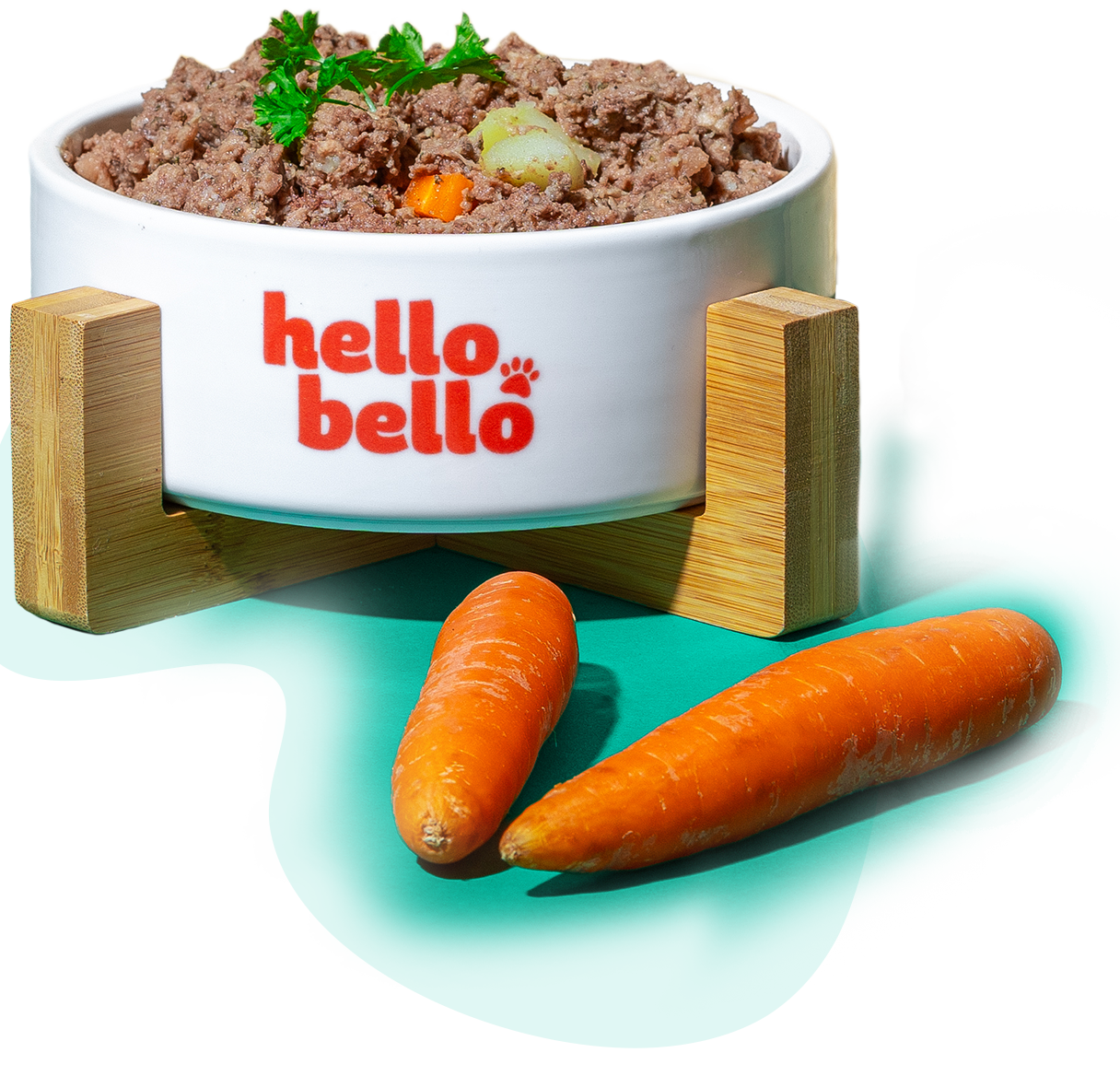
Conclusion: A bland diet is a start, not a strategy
A bland diet for dogs can be exactly the right thing if the stomach needs short-term rest. Rice, chicken, and carrots are simple, mild ingredients and are well tolerated by many dogs in acute moments.
But they are not a long-term solution. If your dog repeatedly reacts sensitively, they do not need a permanent bland diet, but rather a diet that is complete, easily digestible, and individually tailored. Because a healthy bowl should not only calm the stool. It should reliably nourish your dog every day.
And if you are unsure whether diarrhea is harmless or there is more to it: better to go to the veterinarian once too soon than once too late.

Anita Lorber
Sources:
Candellone, A., Cerquetella, M., Girolami, F., Badino, P., & Odore, R. (2020). Acute diarrhea in dogs: Current management and potential role of dietary polyphenols supplementation. Antioxidants, 9(8), 725. https://doi.org/10.3390/antiox9080725
FEDIAF. (2025). Nutritional guidelines for complete and complementary pet food for cats and dogs. European Pet Food Industry Federation. https://europeanpetfood.org/self-regulation/nutritional-guidelines/
Freeman, L., Becvarova, I., Cave, N., MacKay, C., Nguyen, P., Rama, B., Takashima, G., Tiffin, R., van Beukelen, P., & Yathiraj, S. (2011). WSAVA nutritional assessment guidelines. Journal of Small Animal Practice, 52(7), 385-396. https://doi.org/10.1111/j.1748-5827.2011.01079.x
Lappin, M. R., Zug, A., Hovenga, C., Gagne, J., & Cross, E. (2022). Efficacy of feeding a diet containing a high concentration of mixed fiber sources for management of acute large bowel diarrhea in dogs in shelters. Journal of Veterinary Internal Medicine, 36(2), 488-492. https://doi.org/10.1111/jvim.16360
National Research Council. (2006). Nutrient requirements of dogs and cats. National Academies Press. https://doi.org/10.17226/10668
Rudinsky, A. J., Parker, V. J., Winston, J., et al. (2022). Randomized controlled trial demonstrates nutritional management is superior to metronidazole for treatment of acute colitis in dogs. Journal of the American Veterinary Medical Association, 260(S3), S23-S32. https://doi.org/10.2460/javma.22.08.0349
Stockman, J., Fascetti, A. J., Kass, P. H., & Larsen, J. A. (2013). Evaluation of recipes of home-prepared maintenance diets for dogs. Journal of the American Veterinary Medical Association, 242(11), 1500-1505. https://doi.org/10.2460/javma.242.11.1500
Zoran, D. L. (2004). Nutritional management of gastrointestinal disease. Clinical Techniques in Small Animal Practice, 19(4), 211-217. https://doi.org/10.1053/j.ctsap.2004.09.002
Ready to give your dog a healthier and longer life?
Order gluten-free dog food now and 30 % save!
Order now


