
You know the feeling. You're out walking your dog, everything is as usual – and yet in the evening you discover soft stools on the grass again. Or your dog grumbles with their tummy at night, suddenly refuses their food, or has gas that would only make you both laugh if it didn't happen so often.
A sensitive stomach is one of the most common health issues dog owners deal with. The good news first: in the vast majority of cases, there is no serious underlying illness, but simply the wrong food. And that is exactly where you can make a difference.
In this guide, we'll look together at how to recognize a sensitive stomach, what causes it – and what really matters when choosing food.
Short & sweet: the most important things in 30 seconds
- A sensitive stomach shows itself through soft stools, gas, vomiting, or loss of appetite.
- Causes range from simply poorly digestible food to genuine allergies or intolerances.
- A food allergy is an immune reaction, an intolerance is not – but the symptoms are very similar.
- Decisive for the food choice: high-quality, easily digestible ingredients, gentle processing, no artificial additives.
- Freshly cooked, individually tailored food is often the best-tolerated option for sensitive stomachs – because it can be tailored exactly to the individual dog.
Jump to section
What does "sensitive stomach" even mean in dogs?
The term "sensitive stomach" is not an official medical term, but rather a collective term. It means that a dog's digestive system reacts more sensitively to certain ingredients, food changes, or stress than that of other dogs.
A dog's digestive system is significantly shorter compared to a human's and is designed to process food within a few hours. If the composition of the food does not suit this system – for example, due to poorly digestible fillers, a high fat content, or unsuitable protein sources – the gut reacts more quickly with discomfort than in more robust dogs.
Typical triggers for an irritated stomach:
- A food change that is too sudden
- Low-quality or poorly digestible ingredients
- Stress, for example due to moving, a vet visit, or a new environment
- Individual sensitivity to certain proteins or carbohydrates
- Underlying conditions such as a food allergy or chronic intestinal diseases

Symptoms: How do you recognize a sensitive stomach?
Your dog's stool is one of the most honest indicators you have. Firm, well-formed stools show that digestion is working. Soft or inconsistent stools over several days, on the other hand, are a clear signal to take a closer look.
Also pay attention to:
- Frequent or recurring vomiting
- Gas and audible stomach rumbling
- Loss of appetite or picky eating
- Noticeably strong reactions to food changes, new treats, or chew items
- Itching or skin problems (a sign that there could be more going on than "just" digestion)
Individual symptoms are usually not a cause for concern. But if they occur regularly or in combination – such as diarrhea or vomiting, for which we have our own guides –, it is worth taking a closer look at the food.
Allergy, intolerance, or simply a sensitive stomach?
These three terms are often confused in everyday life – but it is worth making the distinction, because it influences how you proceed.
Food allergy: The immune system mistakenly identifies a harmless protein in the food as a threat and reacts to it. A genuine allergy usually develops only after repeated exposure to the triggering substance – so a dog can eat a food without problems for years and suddenly react allergically.
Food intolerance: The immune system is not involved here. Often, an enzyme deficiency is behind it, such as lactose intolerance, or simply irritation of the digestive tract by certain ingredients.
Simply a sensitive stomach: Some dogs are generally more sensitive to food changes, stress, or poorly digestible ingredients without an actual allergy or intolerance being present.
The symptoms often look almost identical in all three variants: diarrhea, vomiting, gas, and sometimes also skin problems. That is why: with persistent discomfort, do not guess, but work together with the vet to determine what is really going on.
The symptoms often look almost identical in all three variants: diarrhea, vomiting, gas, and sometimes also skin problems. That is why: with persistent discomfort, do not guess, but work together with the vet to determine what is really going on – you can find our detailed symptom check for food allergies and a broader overview of allergies in dogs in general in our further guides.
The most common triggers in food
Not every ingredient is equally suitable for every dog. Studies on food allergies in dogs show a recurring pattern – usually, it is precisely the protein sources that are most frequently found in conventional dog food:
| Ingredient | Why it often causes problems |
|---|---|
| Beef | One of the most frequently used protein sources – and therefore also one of the most common triggers |
| Chicken | Considered easily digestible, but can still cause allergies, especially with frequent exposure |
| Dairy products | Contain lactose, which many adult dogs can only partially digest |
| Wheat & Gluten | Can promote inflammatory reactions in the gut of sensitive dogs |
| Soy, Corn | Often included as an affordable filler in industrial food, harder to digest for some dogs |
Important to understand: These ingredients are not fundamentally "bad". They only cause reactions above average so often because they are used so frequently. The more often a dog comes into contact with a certain ingredient, the more likely it is to develop a sensitivity to it.
What makes good food for sensitive stomachs
If you are looking for suitable food for your dog, these criteria will help you make the right choice. At HelloBello Dog Food, we make sure that these points are met in every recipe – individually tailored to the respective dog:
- High-quality, easily digestible protein sources. The higher the quality of the meat or fish, the better the body can actually utilize the protein – and the fewer undigested residues burden the gut.
- Clear, manageable ingredient list. Less is often more here. A long list of additives and fillers increases the risk that a problematic ingredient is included.
- No artificial colors, flavors, or preservatives. These provide no nutritional value, but can cause additional irritation.
- A balanced, adjusted fiber content. Fiber supports digestion – too much or too little can also throw it out of balance.
- Gentle processing. How food is manufactured significantly influences how well your dog can digest it. Highly heated, extruded ingredients are often harder for a sensitive stomach to process than gently cooked ones.
- Individual tailoring to the individual dog. No dog is like another – food designed generally for "all dogs" can hardly avoid known irritants in a targeted way.

Dry food, wet food, or fresh food – which is best tolerated?
A look at the three common types of food shows clear differences in digestibility:
| Food type | Production | Relevance for sensitive stomachs |
|---|---|---|
| Dry food | Extrusion at high temperatures and pressure | Long shelf life, but the intensive heat treatment can reduce nutrients and digestibility; often contains many fillers |
| Wet food | Heating and sterilization in the can | Usually better tolerated than dry food, but often also contains additives and has a changing recipe |
| Freshly cooked food | Gentle cooking at lower temperatures | Nutrients and natural structure are better preserved, making it generally easier to digest |
| BARF (raw) | No heating | Can be well tolerated, but requires very precise ration calculation to avoid nutrient deficiencies |
For dogs with a sensitive stomach, one thing above all is crucial: the gentler the processing and the more precisely the recipe is tailored to the individual dog, the calmer the stomach will remain.

Why freshly cooked, individual food is particularly suitable
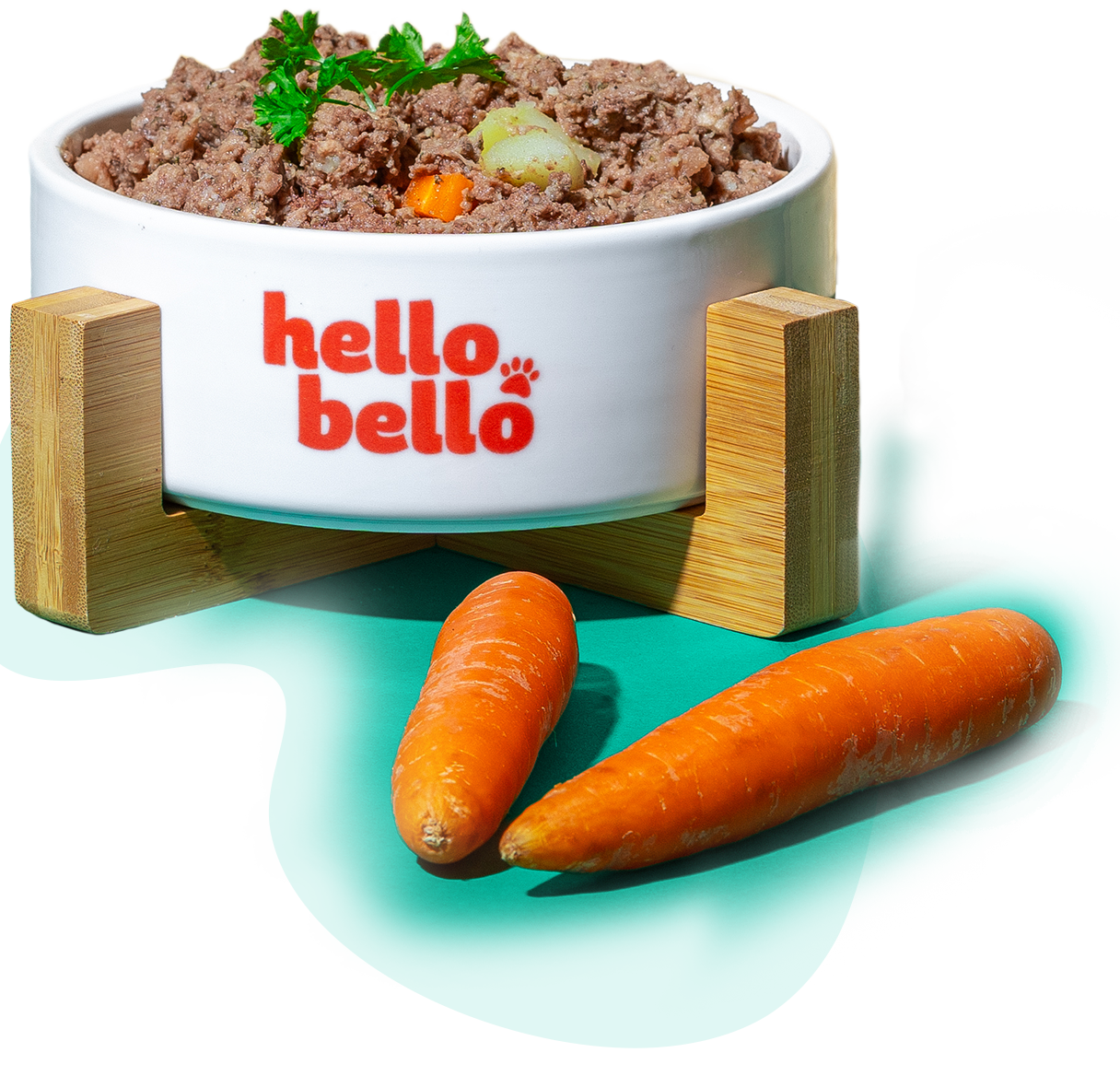
This is exactly where HelloBello comes in. Our fresh food is gently cooked instead of being extruded at high temperatures. This not only preserves more natural nutrients but also makes the ingredients noticeably easier to digest for the dog's stomach.
The crucial difference from classic dog food: Every recipe is calculated individually for the respective dog – tailored to age, weight, activity level, and also known intolerances. For example, if you know that your dog does not tolerate chicken, this can be taken into account directly in the recipe, instead of having to choose the least bad product from a rigid range.
In addition:
- Fresh, regional ingredients without unnecessary fillers, artificial flavors, or preservatives
- Balanced complete foods that provide all the important nutrients in the right amounts – no more and no less
- Developed by veterinary specialists and recommended by practicing veterinarians
- High acceptance, the food is eaten willingly and without hesitation by most dogs – especially with dogs with sensitive digestion, which is a real advantage
Many dog owners report that a noticeable improvement in their dog's well-being – firmer stools, less bloating, more energy – shows itself already within a few weeks after the switch. This is no coincidence, but the direct result of a better digestible, specifically tailored recipe.

Switching food correctly: How to make the transition successful
Even the best food can cause short-term discomfort if switched too abruptly. To make the transition as smooth as possible:
- Introduce it slowly. Over 7 to 10 days, gradually mix the new food under the usual food and increase the proportion daily.
- Observe instead of giving up. A slightly softer stool in the first few days is normal, as long as it stabilizes again within the transition phase.
- Only make one change at a time. If you change food, treats, and chew items at the same time, it will be difficult to figure out later what was not tolerated.
- Small, more frequent meals additionally relieve the stomach, especially during the transition phase.
When you should go to the vet
Occasionally soft stool is usually not an emergency. It looks different in:
- Persistent diarrhea or vomiting for more than 24 hours
- Blood in the stool or vomit
- Significant weight loss
- Noticeable lethargy, fever, or severe abdominal pain
- Recurring symptoms despite a food switch
In these cases, the veterinarian can specifically clarify whether an allergy, an intolerance, or another illness is behind it – for example with the help of an elimination diet, where a single, new protein and carbohydrate source is specifically fed over several weeks.

Frequently asked questions about sensitive stomachs
What is the most common cause of a sensitive stomach in dogs?
Most often, it is hard-to-digest or low-quality ingredients in the food, as well as a too abrupt food switch. Stress can also temporarily throw the digestion out of balance.
Is a food allergy in dogs curable?
No, an allergy that has once developed usually persists. But it can be well controlled by consistently avoiding the allergen and a suitable food switch.
How long does it take for a food switch to show positive results?
The first improvements in stool and well-being often show themselves within a few weeks. With underlying intolerances, it can also take a little longer.
Is fresh food automatically better tolerated than dry food?
Not automatically, but generally yes: The gentler processing preserves more natural nutrient structure, which generally improves digestibility. Crucially, the quality and individual tailoring of the ingredients always matter too.
Can my dog be allergic to grain?
Yes, although less often than to animal proteins like beef or chicken. Especially gluten-containing grains like wheat can cause discomfort in sensitive dogs.
Is a food switch enough, or do I also need to go to the vet?
For mild, occasional discomfort, a targeted food switch may already be enough. With persistent or recurring symptoms, you should always have it checked by a veterinarian.
Conclusion: The right feeding makes the difference
A sensitive stomach is burdensome for both the dog and the owner – but in most cases, it can be well managed. The most important lever is almost always the food itself: high-quality, easily digestible ingredients, gentle processing, and ideally a recipe that is precisely tailored to the individual dog.
This is exactly the reason why we at HelloBello calculate every recipe individually, instead of relying on a rigid standard food. Because your dog deserves a diet that suits them – not the other way around.

Anita Lorber
Ready to give your dog a healthier and longer life?
Order gluten-free dog food now and 30 % save!
Order now


