
A new puppy is moving in. The apartment smells different, everyday life suddenly feels like a state of emergency – and at the same time, this little creature is so fragile, so curious, so completely dependent on you that you want to do everything right all at once.
The first impulse: Google. And then: too much information, too many opinions, too much contradictory half-knowledge.
This guide clears things up. You will get a clear, scientifically sound overview of what your puppy really needs in the first weeks and months – from nutrition to vaccinations, as well as socialization, sleep, and dental care. Puppy health doesn't start with the first vet visit – it starts on the first day at home. What you do right now will pay off for a dog's entire life.
Jump to section
The first days: Let them settle in
Before it comes to vaccination schedules and nutrition plans, the most important thing comes first: your puppy needs time. Moving from their mother, siblings, and familiar environment to a completely new home is a massive stressful experience for them – even if they seem curious and playful.
What helps in the first 48 hours:
- A quiet, low-stimulation environment – no wave of visitors from friends and family in the first few days
- Set up a fixed, safe sleeping place, preferably with a piece of fabric that smells like their mother or siblings
- Continue feeding the previous food – only change food after they have settled in, so as not to put additional strain on their already stressed gut
- No pressure when exploring: Let your puppy decide when they want to explore the apartment
Bello's fact:
Puppies sleep 16–20 hours a day. This isn't laziness – it's active brain development. Every nap processes new impressions and consolidates what they have learned. Let your puppy sleep as much as they need.

Puppy health starts in the bowl – nutrition in puppyhood
No decision has had as much long-term impact on puppy health as what goes into their bowl every day. Not even genetics.
That may sound exaggerated – but it isn't. Several independent studies now show that nutrition in puppyhood measurably affects the immune system, gut flora, skin, and even the dog's lifespan.
What does a growing puppy need?
Puppies are not small adult dogs. Their nutrient requirements differ fundamentally – not only in quantity, but in composition:
- High-quality protein (28–32%): For muscle building and organ and tissue growth. The source matters: real food-grade meat is significantly more digestible than meat meal or by-products.
- Calcium & phosphorus in the right ratio (1.2:1 to 1.4:1): Too much calcium is just as problematic as too little – especially in large breeds, an imbalance can lead to skeletal diseases.
- Omega-3 fatty acids (DHA): Crucial for brain and vision development. DHA is only found in significant amounts in animal sources – fish oil is one of the best.
- No empty carbohydrates: Cheap fillers like corn or wheat provide calories, but hardly any nutrients – and can destabilize blood sugar.

Freshly cooked dog food vs. dry food – what does the research say?
The scientific community is now fairly united: What your puppy eats affects its health far beyond the bowl.
A Finnish study showed that replacing just 20% of dry food with fresh food in puppyhood measurably reduced the risk of skin allergies – not eventually, but demonstrably later in the dog's life. (Hemida et al., 2021)
Even more impressive: Puppies fed unprocessed meat and vegetables in their first months of life had demonstrably healthier gut flora and a lower risk of chronic intestinal inflammation in adulthood. (Hemida et al., 2023)
And then there is the study that has made many dog owners rethink: Freshly fed dogs lived on average 32 months longer than dogs fed highly processed industrial food. That is almost three more years with your dog. (Lippert & Sapy, 2003)
HelloBello's freshly cooked dog food – veterinarian-developed, specially for puppies
This is exactly where HelloBello Fresh Food comes in. Our fresh food, gently cooked at 90°C, consists of regional food-grade meat – beef, chicken, or pork – supplemented with natural vegetables, without artificial additives, without bone meal, without fillers. The portions and recipes are regularly adapted to your puppy's needs – developed by veterinary specialists.
- 🥩 Cowgenuss (Beef): High in protein & iron – ideal for actively growing puppies
- 🍗 Gockelspeis (Chicken): Particularly easy to digest – perfect for sensitive stomachs during the settling-in phase
- 🐷 Ringeltanz (Pork): Healthy fats & shiny coat – rich in omega fatty acids

Bello's tip:
If your puppy has just moved in, continue feeding the usual food from the breeder or animal shelter for the first few days. After they have settled in, you can then gently switch to HelloBello – over 7–10 days, by slightly increasing the fresh food portion every day. Your puppy will smell the difference – and eat it.
Vaccinations: what, when, and why
Vaccinations, along with nutrition, are the most effective tool to ensure long-term puppy health. And yet, there is more confusion than necessary surrounding the topic of vaccination.
Core vaccines – the mandatory program for every dog:
- Distemper: Highly contagious, often fatal, no cure. First vaccination from the 8th week of life.
- Parvovirus: Attacks the intestines, extremely dangerous for puppies and frequently fatal.
- Canine infectious hepatitis (HCC): Viral liver inflammation, transmissible through direct contact with dogs.
- Leptospirosis: Bacterial disease, transmissible to humans (zoonosis). Annual booster recommended.
Non-core vaccines – depending on your lifestyle:
- Rabies: Mandatory in Germany for travel abroad and certain regions
- Kennel cough (Bordetella/Parainfluenza): Recommended when in contact with other dogs
- Lyme disease: Makes sense in areas with tick exposure
The vaccination schedule at a glance
| Age | Vaccination |
|---|---|
| 8th week | Distemper, Parvo, HCC, Leptospirosis if applicable |
| 12th week | Distemper, Parvo, HCC, Leptospirosis, Rabies if applicable |
| 16th week | Parvo (recommended for large breeds) |
| 15th month | Booster for all core vaccinations |
| Annually | Leptospirosis, kennel cough (as needed) |
| Every 3 years | Distemper, parvovirus, HCC |
Important:
The exact vaccination schedule depends on where you live, your dog's lifestyle, and your veterinarian's advice. This table is not a substitute for individual veterinary advice.
Deworming & parasite control
Parasites are a serious issue for puppies – not only because of puppy health, but also because some worms can be transmitted to humans.
Deworming
Puppies are often born with worms. The ESCCAP recommendation:
- Deworming at 2, 4, 6 and 8 weeks – often already by the breeder
- Then monthly until the 6th month
- Then every 3 months – for life
Relevant worm types:
- Roundworms (Toxocara canis) – most common infection, transmissible to humans
- Hookworms – bloodsuckers, life-threatening in puppies
- Tapeworms – transmissible via fleas or raw meat
- Heartworms – relevant for traveling dogs and in Southern Europe
Fleas & ticks
Fleas can transmit tapeworms and lead to serious anemia in puppies. Always consult your veterinarian before using spot-on treatments or tablets – puppies react more sensitively to active ingredients than adult dogs.
Bello's tip:
Ask your veterinarian about an individual deworming and parasite control plan at your dog's first visit. What works in Bavaria may not be the same solution for a dog in Brandenburg.
Socialization – your dog's most important window
Between the 3rd and 16th weeks of life lies the so-called socialization window – a critical phase of brain development in which dogs learn what is normal and what is not. The impressions your puppy makes during this time shape its behavior for life more strongly than any later training.
What it gets to know now – people, children, other dogs, cars, bicycles, vacuum cleaners, rain – will become its normal. What it does not get to know can later trigger fear or aggression.
What counts during the socialization phase:
- Different people: Men, women, children, older people, people with hats, glasses, beards
- Other animals: Dogs of different sizes and breeds, cats if possible
- Different environments: City, nature, stairs, smooth floors, loud places
- Everyday noises: Vacuum cleaners, hair dryers, thunderstorms, fireworks – best first quietly and from a distance
- Practice touching: Paws, ears, mouth, claws – this makes future vet and grooming visits much easier
Important: Socialization does not mean throwing the puppy into every situation. It is about positive experiences in controlled doses. Overstimulation is just as harmful as too little.
Bello's fact:
Dogs that had good contact with people and other animals during the socialization phase demonstrably show less fear and aggression behavior in adulthood. (Scott & Fuller, 1965)
Sleep & rest: Underrated, but crucial
16 to 20 hours of sleep per day – this is not a luxury, it is biology. During sleep, the puppy's brain consolidates all new impressions, the immune system regenerates, growth hormones are released.
What this means for everyday life:
- Do not force activity if your puppy wants to sleep
- Create a quiet, fixed sleeping place – no thoroughfare, no place with many stimuli
- Actively plan rest periods after play sessions and walks
- Children in the family must learn: Sleeping puppy = hands off
Sleep deprivation in puppies does not manifest like in humans through tiredness, but paradoxically through overactivity, irritability, and poor learning ability. If your puppy completely revs up in the evening – often the reason is simply too little sleep.

Dental care from the start
Dental problems are one of the most common reasons for dog vet visits – and one of the most avoidable. Starting early saves your dog real pain later and yourself expensive dental treatments under anesthesia.
Here's how, step by step:
- First with the finger: Gently rub over the gums and teeth – without a brush, without paste
- Then introduce a finger toothbrush: Slowly, with positive reinforcement
- Then to a real toothbrush: Always dog toothpaste – never human toothpaste, fluoride is toxic to dogs
- Frequency: Ideally daily, at least 3× per week
- Chews as support: Natural bones, chew rolls, or dental care chews mechanically reduce plaque
Bello's tip:
Make a small checklist and practice dental care daily for 30 seconds – right after dinner. In four weeks it will be a fixed part of your routine that your dog accepts, instead of fleeing.
Dog health insurance – is it worth it?
An honest assessment: Yes, dog health insurance can be worth it – but not for every dog and not every policy.
Veterinary costs in Germany have been rising for years, not least due to the new fee schedule for veterinarians (GOT 2022). A knee operation can quickly cost 2,000–4,000 euros, a cancer treatment can reach five figures.
What you should pay attention to:
- Waiting periods: Most policies have 3–6 months – sign up directly in puppyhood, before pre-existing conditions arise
- Pre-existing condition exclusions: What is diagnosed at the first vet visit can be excluded later
- Surgery insurance vs. full insurance: The former covers only operations, the latter also diagnoses, medications, and preventive care
- Reimbursement rate & annual maximum: 70, 80, or 100% – and up to what amount?
- Breed-specific diseases: Some breeds are more susceptible – check if these are included
When to go to the vet? The most important warning signs
At the latest within the first 3 days after moving in, your puppy should be presented to the vet – even if everything seems fine.
Immediately to the vet for:
- Vomiting or diarrhea for longer than 12 hours
- Blood in the stool or vomit
- Total refusal to eat for more than 24 hours
- Extreme lethargy or weakness
- Difficulty breathing, persistent cough or sneezing
- Eye or nasal discharge
- Pale gums – warning sign for anemia or circulatory problems
- Bloated belly combined with restlessness
- Fever over 39.5°C
Bello's fact:
Puppies do not yet have a fully mature immune system. What would be a minor ailment in an adult dog can quickly become dangerous in a puppy. In case of doubt: better call once too often than wait too long.
HelloBello – the right foundation for puppy health
A healthy start to dog life is the interplay of many factors – but daily food is the only one of them that you can actively influence twice a day.
HelloBello freshly cooked dog food was developed by veterinary specialists, specially adapted for puppies, and consists of regional meat of food grade, gently cooked at 90°C, delivered frozen – without bone meal, without artificial additives. Portions and recipes are individually tailored to breed, age, and weight.
Because what ends up in the bowl determines years of life.

Conclusion: Patience pays off – for both of you
Raising a puppy healthily is no secret – but it requires knowledge, consistency, and the awareness that the decisions of the first months have long-term effects.
- Let your puppy settle in during the first few days – without pressure
- Start early with high-quality nutrition – it is the foundation for everything
- Stick to the vaccination and deworming schedule – consistently and in consultation with the veterinarian
- Use the socialization window – it closes faster than you think
- Give your puppy enough sleep – it grows and learns during it
- Start dental care early – your future self will thank you
- Consider dog health insurance – preferably before it is needed

Anita Lorber
Sources
- Hemida, M. B. M. et al. (2021). Early life modifiable exposures and their association with owner reported inflammatory bowel disease symptoms in adult dogs. BMC Veterinary Research, 17, 491.
- Hemida, M. B. M. et al. (2023). Puppyhood diet as a factor in the development of owner-reported allergy/atopy skin signs in adult dogs in Finland. Journal of Veterinary Internal Medicine.
- Lippert, G. & Sapy, B. (2003). Relation between the domestic dogs' well-being and life expectancy. Privately published study.
- Scott, J. P. & Fuller, J. L. (1965). Genetics and the Social Behavior of the Dog. University of Chicago Press.
- ESCCAP (2021). Worm Control in Dogs and Cats. ESCCAP Guideline 01, 7th Edition.
- StIKo Vet (2022). Guideline on Vaccination of Small Animals. DVG.
- GOT (2022). Fee Schedule for Veterinarians. BMEL.
Start now with the right foundation. Freshly cooked. Developed by veterinarians. Tailored to your puppy.
Order freshly cooked dog food now and save 30%!
Try now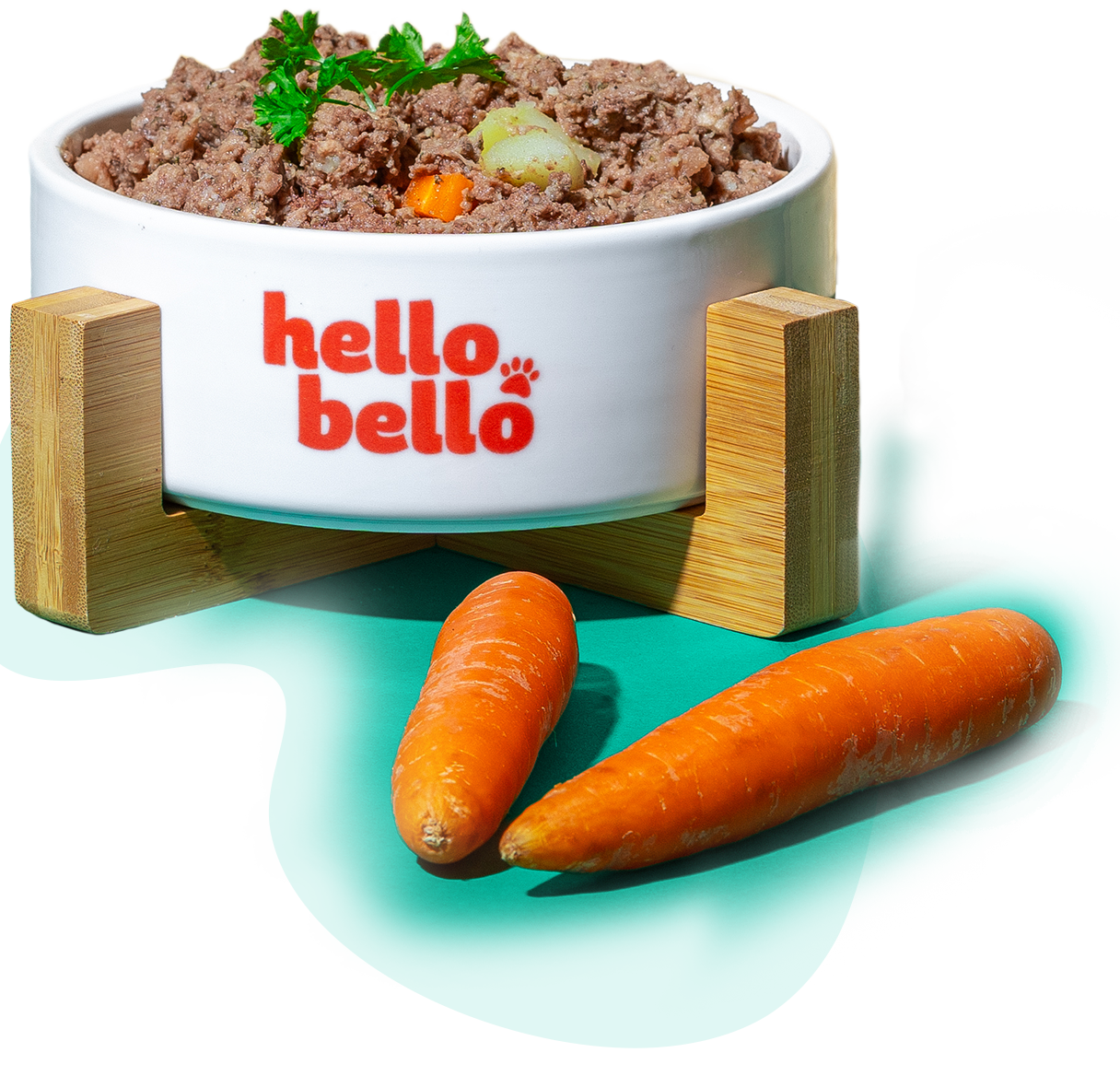
Ready to give your dog a healthier and longer life?
Order gluten-free dog food now and 30 % save!
Order now


